Saturday, January 7, 2017


The Calcium Deficiency -The less well known facts 

Do you know if you are calcium deficient?


Calcium is a mineral that is crucial for life and its role extends from maintaining bones healthy, nerve conduction, muscle contraction and blood clotting sequence essential for maintaining life. It is estimated that 99 percent of calcium in our body is in the bones. The rest of the calcium is involved in the functions outlined above. It is well known that Calcium is a predominant factor in healthy bones and strong teeth. Calcium (chemically Ca) keeps on building the bone mass till the age of 25 years and thereafter keeps on maintaining the bone health, absence or deficiency leading to loss of strength in bones and in post-menopausal women the grave condition called Osteoporosis is developed which is in effect the calcium is drawn from the reserves in the bones. The common men may not be aware that calcium is involved in muscle contraction , heart beat and in fact regulating the blood clotting system essential for a good circulation. As things stand, the less well realised fact is that this element is involved in maintaining hormone levels as well as the enzymes needs for daily functioning of our body. Less well realised fact is that vitamin D plays a key role in absorbing and maintaining the calcium level in our body. It is here the abundant effect of sunlight exposure always plays its vital role.
Most of us know that deficiency of this mineral leads on to many diseases and complications in our daily life as most of the body functions are affected. The significant signs of calcium deficiency are

1)   The loss of bone strength and loss of bone mineral density (BMD). This leads to fractures and brittle bones in women referred as osteoporosis.

2)   Less known fact is the lack of proper sleep that comes in the wake of calcium deficiency. A good sleep is quintessential for healthy bones and calcium is intimately linked to our sleep wake cycle commonly referred to as circadian rhythm. The calcium level n blood reaches its peak when you are in deep sleep.it follows that calcium levels reaches its peak and nadir during sleep and the research has proven the truth that calcium also plays as significant role   in the production of melatonin, referred to as sleep hormone. As a corollary, increasing the calcium level in the blood is essential for maintaining a good sleep pattern and forming a proper sleep—wake cycle as already referred to.


3)   Did you know the role of calcium in weight loss in this age perplexing problem of obesity abounding in all age groups and plays havoc with life? I will talk about the exacting issue of obesity in another article. Suffice it to say that fat cells with high calcium content burns fat easily and faster, helping you to shed the extra pounds around your waist. If you are exasperated that your efforts in weight loss is going waste, despite strict diet and tiring work outs, it is time you think of calcium deficiency in your system. So rev up , get sunshine and take calcium rich foods

4)   Do you feel “pins & needles” in your body or limbs? In medical jargon, called as paraesthesia, this disease is an indicator of calcium deficiency or at least it can be considered, before jumping to conclusions involving costly medical check-up and tests. This is a neurological condition affecting you as a tingling sensation, loss of memory poor concentration, confusion, hearing impairment, tremors or twitches apart from other nerve related symptoms. Oh, yes does it ring bells now? It is the role of calcium in nerve health which is affected here.

While I have highlighted the less well known, yet very serious aspects, it will be unfair to mention at least, the well-known deficiency diseases like Rickets, a prerogative for children, Osteopenia (loss of bone strength) and well heard of osteoporosis, which I have already mentioned. While these are very evident conditions, there are varying levels of deficiency ranging in intensity from non-existent to minimal and severe level of deficiency.


How much calcium do we need Is the million dollar question Now
The RDA (recommended daily allowance based on the is listed below according to the medical science


§ age 0 to 6 months: 200 mg per day
§ age 7 to 12 months: 260 mg per day
§ age 1 to 3 years: 700 mg per day
§ age 4 to 8 years: 1000 mg per day
§ age 9 to 18 years: 1300 mg per day
§ age 19 to 50 years: 1000 mg per day
§ breastfeeding or pregnant teenager: 1000 mg per day
§ breastfeeding or pregnant adult: 1000 mg per day
§ age 51 to 70 years (male): 1000 mg per day
§ age 51 to 70 years (female): 1200 mg per day
§ age 71+ years: 1200 mg per day


This brings us to the foods rich in calcium and they are
1) Milk, the well-known calcium source as grandmothers always vouched for.
2) Yoghurt
3) Curd
4) Seaweeds, such as kelp, hijiki and wakame
5) Nuts and seeds, including pistachio, sesame, almonds, hazelnuts
6) Beans
7) Figs
8) Broccoli
9) Spinach, Toflu,Dandelion leaves
10) Many fortified breakfast cereals
11) Many fortified drinks, including soy milk and a variety of fruit juice
12) Crushed eggshells - they can be ground into a powder and added to foods and/or drinks


People with calcium deficiencies (hypocalcaemia) are usually advised to take calcium supplements. The supplements should be taken with food for best absorption or to minimize possible undesirable side effects. Each intake of supplements should not exceed 600 mg; if more than that is consumed in one go, the excess will not be absorbed as well.
Calcium supplements should be consumed at intervals spread throughout the day. Vitamin D is added to many calcium supplements, because it encourages the synthesis of proteins in the body which make the absorption of calcium possible.
Choosing the right supplement these days can be confusing; there are various different types in a wide range of combinations and preparations. Which one to select depends on the patient's needs and preferences, their medical condition, and whether they are on any medications?
Elemental calcium, the pure mineral, exists in its natural form with other compounds. Therefore, Calcium supplements come as different calcium compounds with varying amounts of elemental calcium, to cite a few examples
§ Calcium carbonate contains 40% elemental calcium. This type is more commonly available; it is relatively cheap and convenient. It is absorbed best when taken with food because of its dependence on stomach acids for absorption.
§ Calcium lactate contains 13% elemental calcium
§ calcium gluconate contains 9% elemental calcium
§ Calcium citrate contains 21% elemental calcium. This one has the advantage in that it can be taken with or without food, and is absorbed equally well. It is useful for patients with inflammatory bowel disease, achlorhydria and some absorption disorders.
Excess calcium supplements can sometimes lead to adverse effects!!!
People have complained of gastrointestinal symptoms, such as bloating, constipation, gas, or a combination of all three. Calcium citrate usually has fewer and less pronounced side effects than calcium carbonate. Taking the supplements with food, or spreading their intake throughout the day sometimes reduce the occurrence or intensity of these side effects.
Apart from adding vitamin D, calcium sometimes magnesium is also added too.
Researchers have found that calcium supplements increase the risk of developing kidney stones as an adverse effect. Yet another study found that calcium supplements may raise heart attack risk, which is not well documented. Here again, the old adage still holds true that too much of anything is bad. In India it is said that even too much   Amrut (the nectar of eternity) is bad!!!
The following conditions, circumstances, or illnesses are known as possible causes of hypocalcemiaa (calcium deficiency):
§  Bulimiaanorexia and some other eating disorders
§  Mercury exposure
§  Over Consumption of magnesium
§  Long-term use of laxatives
§  Prolonged use of some medicines, such as chemotherapy or corticosteroids
§  Chelation Therapy used for metal exposure
§  Lack of parathyroid hormone
§  people who eat a lot of protein or sodium may excrete calcium
§  Some cancers
§  Postmenopausal women who consume a lot of caffeine, soda or alcohol have a greater risk of having low levels of calcium
§  Celiac disease, inflammatory bowel disease, Crohn's disease, and some other digestive diseases.
§  Some surgical procedures, including the removal of the stomach
§  Kidney failure
§  Pancreatitis
§  Vitamin D deficiency
§  Phosphate deficiency
§  Some people who follow a vegan diet may experience calcium deficiency if they do not carefully seek out plant-based calcium rich or calcium-fortified foods
§  Osteoporosis
§  Osteopenia
§  People who are lactose intolerant may not get enough calcium if they depend solely on milk do not carefully select non-dairy foods which are rich in calcium or have the mineral added to those foods


Tuesday, January 3, 2017

IODINE DEFICIENCY  _ A GLOBAL CONCERN

Are you in endemic are for iodine deficiency 


Image result for image of goiter disease


Iodine deficiency is a very common problem worldwide and is a major cause of thyroid diseases.Approximately 30% of world population live in iodine deficient condition. In India almost 300 million people are in iodine deficient areas and this has prompted government to iodise table salt which has shown remarkable progress in reduction of IDDs. The entire mechanism of how deficiency of iodine causes hypothyroidism is a complex matter and I will keep it simple. Deficiency of iodine causes a range of diseases which, are termed as iodine deficiency diseases(IDD) including mental retardation,cretinism, infant mortality and goitre which is grave, marked by  a swelling of the neck. Deficiency can be due to poor intake in terms of foods rich in iodine,inadequate absorption from intestines due malabsorption diseases & lack of exposure to sunlight. (you can read another blog I have written about  the need for sunlight ) When an individual does not receive enough iodine from food or other sources, the thyroid gland increases in size as in an effort to make enough hormones needed for the body. Thus the thyroid gland is exhausted. Thereby  the condition called goitre is developed. Iodine deficiency in pregnant and lactating women is a serious concern as it is the most popular cause of preventable mental retardation.
The situations where a person might not be getting adequate iodine are many, but may not show any symptoms of iodine deficiency. The easiest way to know if a person has iodine deficiency is to get a urine test done or a blood test done to check the thyroid function. Thyroid is the all too powerful gland for

      1.  Controlling the metabolic rate
2.  Boosting synthesis of proteins
3.  Regulating blood flow and heart rate
4.  Promoting brain development and linear growth in children
5.  Helping the normal reproductive functioning in adults


    The most common signs that can tell you that thyroid is not functioning properly due to deficiency of iodine are listed below.Visible signs would include enlargement of the chin and neck area (caused due to enlargement of your thyroid gland).


1.    You feel lethargic and tired most of the times and suffer from weakness constantly (due to reduced metabolic rates).

2.    You may start feeling cold, even when it is visibly warm for the others around you.
3.    You may have difficulty in concentrating and might have a poor memory ,due to diminished mental power.
4.    You may experience inexplicable &  uncontrollable weight gain
5.    You may become more prone to depressive moods
6.    You may notice your skin becoming thick and puffy or your face becoming puffier than usual.
7.    You may suffer from loss of hair
8.    You may start having frequent constipation.
9.    Your skin might feel really dry.
10.  You might feel your heart beating slower.


The normal recommended intake is 
100 - 150 mcg/day for an adult  and 
Pregnant women - 220 mcg/day
Lactating women - 290 mcg/day
Children aged 1-11 years - 90-120 mcg/day
Infants - Adequate intake is 110-130 mcg/day

Iodine Rich Foods available in India 

Sea Vegetables. The ocean hosts the largest storehouse of iodine foods, including Kelp, Arame, Kombu, and Wakame. etc.......
Fish like sardines,Tuna, Cod,shrimp etc.. 
Egg yolk (esp for children) 
Cranberries. This antioxidant rich fruit is another great source of iodine. ...
 Yoghurt. ...
 Navy Beans. ...
 Strawberries. ...
Raw, Organic Cheese where best options would be Cheddar and Mozzarella..
Organic Potatoes.
Milk and milk products
    
    With proper treatment and change in diet, iodine deficiency disorders can be prevented with ease. For a better health and diagnosis, you must regularly follow up for improving the iodine levels in your body.

Monday, January 2, 2017

ACNE--  A  COMMON  CURSE  OF  FEMALES  AND  MALES

                         DOES ACNE (PIMPLES) BOTHER YOU  ??? 


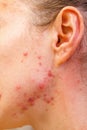
 Acne is a skin condition that is characterized by formation of red bumps on your skin. It usually occurs when you have oily skin wherein, the pores of your skin may get clogged by impurities thus, resulting in acne breakouts. It may also result from the inflammation of the skin wherein, the immune system tries to get rid of the bacteria on the skin.
                                         Acne skin Stock Images
The various  remedies for acne are:

Steaming: you can steam fac twice a day remove excess oil on the face ac and open skin pores so that th blogged sweat and sebaceous glands open and pay way for clearing the acne.

Diet: Diet is an important factor to consider when it comes down to the treatment of acne since what you eat is directly linked to your skin health. Limit eating oily and fried food as they tend to aggravate sebum production on your face. Include plenty of green vegetables in your diet as they provide essential vitamins to nourish your skin.

Exercise: Make sure you exercise on regular basis as it improves circulation in the body. It also keeps your weight in check thus, reducing the risk of cardiac and metabolic disorders. It also facilitates removal of toxins from your body.

Cleanse your face on a regular basis: You must follow a proper skincare regimen where you wash your face with a herbal soap at least twice daily. Don’t use harsh soaps as they can strip your face of all the essential oils, thus indirectly leading to overproduction of oil. Cleaning your face regularly is important to remove the dirt from your face, which otherwise may cause clogged pores, resulting in acne.

Use herbs: Herbs like neem and aloevera as they are good for your skin and they help in reducing the bacteria that lead to acne. You may also use lemon juice as a toner as it has certain properties that reduce oil production and tones the skin. It also has astringent properties, which facilitate tightening of the skin thus, closing the opened 
pores.

Medicnes- There are many medicines to help you get rid of acne.You can consult me on www.lybrate.com/drsajeev

HOME REMEDIES


Egg White

Simple egg whites are an easy and affordable way to help reduce acne and fade scars left by  blemishes. The reason people have found egg whites to be helpful for their skin is because they’re full of proteins and vitamins that combat acne, and help to rebuild your skin cells. They also soak up excess oil, which means excess sebum, (the oily secretion from the sebaceous glands on face) which  bacteria thrive on. Remember to  to use a good moisturizer afterwards, as the egg white can dry your skin a little 
You Have to keep handy 
2 to 3 egg whites, separated from yolks
A bowl
Clean cloth
How to do
Rinse your face with water and pat dry. Separate the whites from the yolks. You can use as many as you like, but normally 2 to 3 is enough. Whisk the whites until they’re frothy, and keep them still for a few minutes. Cover your face with the mixture using fingertips as it is eas, focusing on problem spots. 3 to 4 layers is usually enough, but make sure to wait the first has dried before applying the second layer. Allow the mask to dry for about 20 minutes and rinse off completely with warm water and a pat dry with a soft cloth you have kept handy. Now it is time to apply moisturizer appropriate for your skin type.

Papaya a wonderful natural remedy for pimples 


Papaya is an essential ingredient in a lot of beauty products on the market today, but theres no need spend money shopping them. Plain raw papaya is a natural acne remedy that removes dead skin cells and excess lipids from the surface of the skin, leaving it soft and smooth. Lipids are a general term for fats, of which oil is a part of. Papaya also contains an enzyme called papain, which reduces inflammation and helps prevent the pus from forming.
You have to keep ready
1 fresh papaya
Steps to use
Rinse your face with water and pat dry. Mash up the flesh of the papaya well, until it is of a consistency that can be easily applied to your skin. Leave it on for 15-20 minutes, and then rinse off completely with warm water. If your skin has a tendency to get dry after you cleanse it, use a moisturizer appropriate for your skin type afterwards.


Sunday, January 1, 2017


DO YOU SUFFER FROM ANXIETY AND TENSION -?

Want to avoid anxiety ? 


Suffering unwanted anxiety is very much prevalent nowadays !! 

It is common complaint that " I Suffer from anxiety . Please help me"


 Anxiety is a very normal emotion, which gives rise to feelings of nervousness every now and then. An anxiety disorder is a serious medical condition in which people experience a high degree of distress and mental trauma, which hinders a normal life. People suffering from this medical condition experience high levels of anxiety and nervousness almost all the time. Here are the cardinal symptoms that indicate you're suffering from anxiety disorder.


1. Troublesome & Excess worry - This condition prevails if you worry about the day to day activities  too much on a regular basis. It is identified when you start taking too much stress about very common and routine things,related to life or work which tends to affect you in an adverse way. A noticeable sign of excessive worry can be too much fatigue.

2. Lack of Sleep/irregular,disturbed sleep  - Problems in falling asleep at the right time and problems in maintaining an uninterrupted sleep are two signs that indicate you have an anxiety disorder.

3. Baseless / Irrational fears - This symptom is not generalized; instead, it is specific and subjective in relation to a particular thing or situation. The fears that are experienced under this category are sudden and unexpected in nature and there is no fixed rationale behind these fears. One may ear of death or accident or fall from a plane and so on ....

4. Muscle pain - Muscle discomfort and pain is one of the leading physiological causes of an anxiety disorder. The pain felt is chronic and pervasive, and is very common among people facing situations of anxiety. If you are exposed to constant periods of anxiety, you will experience fatigue, muscle pains and lethargy or unwillingness to work.

5. Unexplained indigestion - Problems related to the digestive system are also a sign of anxiety disorder. In this case, you may face constant digestive problems accompanied by a common disorder called IBS (Irritable Bowel Syndrome). IBS refers to an anxiety situation in the digestive tract, which is characterized by sudden urge to defecate on eating, stomach aches, cramping, bloating, gas, constipation, and/or diarrhea.

Apart from the above-mentioned symptoms, other symptoms of an anxiety disorder include stage fright, self- consciousness, panic attacks, memory flashbacks, perfectionism, compulsive behaviors, self- doubt, and such others.

Symptoms vary depending on the type of anxiety disorder, but general symptoms include:

·         Feelings of panic, fear, and uneasiness.
·         Problems sleeping.
·         Cold or sweaty hands and/or feet.
·         Shortness of breath.
·         Heart palpitations.
·         An inability to be still and calm.
·         Dry mouth.
·         Numbness or tingling in the hands or feet.
 Anxiety is a normal, predictable part of life.However, people with an anxiety disorder are essentially phobic about anxiety feeling. And they’ll go to any lengths to avoid it.
Some people experience generalized anxiety disorder (GAD), excessive anxiety about real-life concerns, such as money, relationships, health and academics,. Others struggle with social anxiety, and worry about being evaluated or embarrassing themselves. People with obsessive compulsive disorder (OCD) might become preoccupied with symmetry or potential contamination. The bottom line is that people can experience anxiety, and anxiety disorders, related to just about anything. Most of these steps contribute to a healthy and fulfilling life, overall. To sum up, making some basic lifestyle changes can do wonders for someone coping with elevated anxiety.Take these steps from today.
1. Take a deep breath.
Deep diaphragmatic breathing triggers our relaxation response, switching from our fight-or-flight response of the sympathetic nervous system, to the relaxed, balanced response of our parasympathetic nervous system, according to,  clinical psychologists,who have suggested the following exercise, which you can repeat several times:
#Inhale slowly to a count of four, starting at your belly and then moving into your chest. Gently hold your breath for four counts. Then slowly exhale to four counts.

2  Be active.
One of the most important things one can do to cope with anxiety] is to get regular cardiovascular exercise,” For instance, a brisk 30- to 60-minute walk “releases endorphins that lead to a reduction in anxiety.”
You can start today by taking a walk. Or create a list of physical activities that you enjoy, and put them on your schedule for the week. Other options include: running, rowing, rollerblading, hiking, biking, dancing, swimming, surfing, step aerobics, kickboxing and sports such as soccer, tennis and basketball, in short just anything you can do to be physically active 
3. Sleep well.
Not getting enough sleep can trigger anxiety. If you’re having trouble sleeping, tonight, engage in a relaxing activity before bedtime, such as taking a warm bath, listening to soothing music or taking several deep breaths and meditation is excellent .If you’re like many people with anxiety whose brains start buzzing right before bed, jot down your worries earlier in the day for 10 to 15 minutes, or try a mental exercise like thinking of fruits with the same letter.

4. Fight an anxious thought.
We all have moments wherein we unintentionally increase or maintain our own worry by thinking unhelpful thoughts. These thoughts are often unrealistic, inaccurate, or, to some extent, unreasonable.
Thankfully, we can change these thoughts. The first step is to identify them. Consider how a specific thought affects your feelings and behaviours. Is it helpful or unhelpful?
These are the types of thoughts you want to challenge. Therefore it is suggested asking yourself:
“Is this worry real?” “Is this going to happen?” “If the worst possible outcome happens, what would be so bad about that?” “Could I handle that?” “What might I do?” “If something bad happens, what might that mean to me?” “Is this really true or does it just seem so.
Then, reframe or correct that thought to make it more accurate, realistic and more adaptive.For example: “I would feel embarrassed if I tripped on the stage, but that’s just a feeling; and it won't last forever, and I would get through it.”
5. Say an encouraging statement.

Positive, accurate statements can help to put things into perspective. See these examples: “Anxiety is just a feeling, like any other feeling.” and “This feels bad, but I can use some strategies to cope with it.”

6. Stay connected to others.
Social support is vital to managing stress,Today, call a loved one, schedule to go to lunch with a close friend. Talking with others can do a world of good. Another option is to get together and engage in an activity that improves your anxiety, such as taking a walk, sitting on the beach or going to a yoga class.
7. Avoid Alcohol and caffeine.

Managing anxiety is as much about what you do as what you don’t do. And there are some substances that exacerbate anxiety. Caffeine/alcohol is one of those substances.The last thing people with anxiety need is a substance that makes them feel more turned on, which is exactly what caffeine/alcohol does.

8. Avoid mood changing drugs .
“While drugs and alcohol might help to reduce anxiety in the short term, they often do just the opposite in the long term,” Even the short-term effect can be harmful.Experts have treated countless clients whose first panic attack occurred while they were taking drugs such as marijuana, ecstasy or LSD. “Panic attacks are bad enough if you are straight and sober, so imagine how bad they are if you are high, and can’t get untied until the drug wears off.”
9. Do something you enjoy.
Engaging in enjoyable activities helps to soothe your anxiety. For instance, today, you might take a walk, listen to music or read a book,
10. Take a break.
It’s also helpful to build breaks into your day. As it is said, this might be a “simple change of pace or scenery, enjoying a hobby, or switching ‘to-do’ tasks.” “Breaking from concerted effort can be refreshing.”
11.Solve Problem

It is suggested considering how you can address the stressors that are causing your anxiety. Today, make a list of these stressors and next to each one, jot down one or two solutions.

12. Read a book.
There are many valuable resources on anxiety, which teach you effective coping skills. Some recommended are Dying of Embarrassment for people with social anxiety; The BDD Workbook for body dysmorphic disorder; The Imp of the Mind and The OCD Workbook for obsessive-compulsive disorder. And It is suggested "Stop Obsessing" for adults with OCD (and Up and Down the Worry Hill for kids with OCD).
For people with panic attacks, it is suggested Don’t Panic: Taking Control of Anxiety Attacks. For a general overview of cognitive-behavioural therapy for anxiety,

13. Engage in calming practices.
 “Meditation, yoga, or other calming practices can help minimize anxiety in both the short and long term.” Sign up for a yoga class or watch a yoga video online. Meditate right now for just three minutes and do for yoga 

14. Consult a therapist.
Sometimes anxiety can be difficult to manage without professional help,Many organizations include databases of providers who specialize in anxiety (along with helpful information)..

15. Accept your anxiety.
If you really want to effectively manage your anxiety, the key is to accept it,”This might sound strange. But anxiety, “in and of itself,” isn’t the real problem. Instead, it’s our attempts at controlling and eliminating it, Not accepting these unwanted inner experiences is the actual source of  self-induced suffering.”
Accepting anxiety doesn’t mean “resigning" ourselves to a life of anxious misery. It simply means that we are better off recognizing and fully accepting the existence of anxiety and other uncomfortable emotional states that are inevitable, but transitory.
So if you experience anxiety today, simply observe it. “Think of it like a wave of the ocean; allow it to come in, experience it, and ride it out.”
Anxiety can feel overwhelming. It can feel like chains around your feet, weighing you down. But by taking small steps – like the ones above – you can minimize your anxiety and cope effectively.
 Have A peaceful life ahead